Wireless Doorbell: A Rising Star in Modern Smart Home Security
Time:2024-06-14 13:56:33 Views:128
I. Introduction
In today's rapidly advancing technological era, smart home products have become an indispensable part of our daily lives. The wireless doorbell, as an important player in the field of smart home security, has gained increasing popularity among consumers due to its unique wireless communication technology and convenient user experience. This article will delve into the wireless communication technology, advantages, and application scenarios of the wireless doorbell, leading you into the fascinating world of wireless doorbells.
II. Wireless Communication Technology of the Wireless Doorbell
The wireless communication technology of the wireless doorbell is the core of its remote monitoring and communication capabilities. This technology ensures real-time and stable transmission of video and voice through wireless signals. Among them, Wi-Fi technology has become the preferred choice for wireless doorbell communication due to its long-range, high-speed, and broad compatibility.
Wi-Fi Technology
(1) Transmission Distance: Wi-Fi technology offers a long transmission distance, typically ranging from tens to hundreds of meters, depending on the home environment and usage scenarios. This allows the wireless doorbell to be installed at a considerable distance from the home entrance without affecting signal quality.
(2) Transmission Rate: Wi-Fi boasts a high transmission rate, supporting high-quality video and audio transmission. This means that the wireless doorbell can transmit clear images and smooth audio in real-time, enabling users to truly understand the situation outside their door.
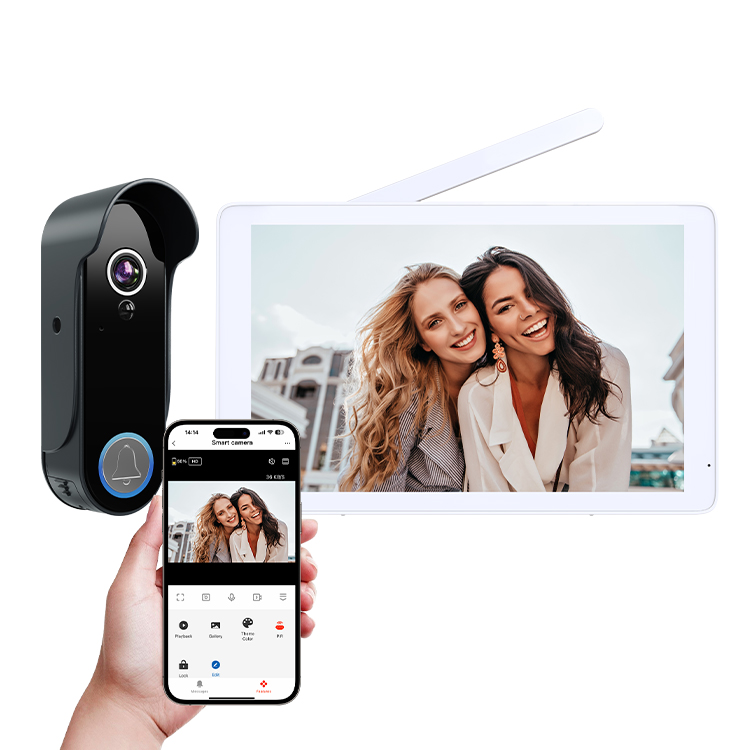
(3) Compatibility: Wi-Fi technology has broad compatibility, seamlessly connecting with most smartphones and indoor units. Users only need to install a corresponding application (such as Tuya App or Acebell App) on their phones to conveniently operate and control the wireless doorbell, achieving remote monitoring and communication functions.
III. Advantages of the Wireless Doorbell
Flexible Connection Method
The wireless doorbell adopts Wi-Fi wireless communication technology, requiring no wiring and ensuring easy installation. Users can choose the most suitable communication method based on their actual needs. For example, in a home environment, users can install the wireless doorbell at the door or in the yard to conveniently monitor the situation outside the door at any time. Moreover, the wireless doorbell supports multi-device connection, allowing family members to share monitoring footage and voice communication functions, achieving comprehensive security protection.
Stable Video Transmission
The wireless doorbell employs advanced wireless communication technology to ensure stable video signal transmission. In a good network environment, the wireless doorbell can achieve high-definition video transmission, enabling users to clearly see the situation outside the door. Additionally, it features automatic adjustment of image brightness and contrast, adapting to different lighting conditions for filming.
Clear Voice Communication
The wireless doorbell not only supports video transmission but also features voice communication functionality. Users can engage in real-time voice communication with visitors through the wireless doorbell to understand their intentions and needs. The wireless doorbell employs high-quality audio processing technology to ensure clear and noise-free audio quality during calls. Users can also adjust the volume and sound effects according to their needs, enhancing the calling experience.
Remote Monitoring and Communication
With Wi-Fi technology, the wireless doorbell enables remote monitoring and communication functions. Users only need to install a corresponding application (such as Tuya App or Acebell App) on their phones to view the real-time situation outside their door and engage in voice communication with visitors anytime and anywhere. This remote monitoring and communication function provides users with great convenience and security, especially when they are not at home, enabling them to stay informed about the situation outside their door and take appropriate action.
IV. Application Scenarios of the Wireless Doorbell
Home Security Monitoring
The wireless doorbell can serve as an essential component of home security monitoring, installed at the door or in the yard to transmit real-time video and audio signals from outside the door to users' phones or indoor units. Users can monitor the situation outside their door at any time and engage in voice communication with visitors to ensure home safety.
Apartment Entrance Monitoring and Management
In multi-tenant environments such as apartment buildings, the wireless doorbell can serve as part of the access control system. Our company's wireless doorbell products support 433MHz wireless unlocking, allowing residents to remotely control the doorbell's on/off status through a mobile app, granting or denying access to visitors.
V. Conclusion
The wireless doorbell, as a rising star in modern smart home security, has gained market recognition due to its unique wireless communication technology and convenient user experience. With continuous technological advancements and expanding application scenarios, the wireless doorbell will play an increasingly significant role in the future. We look forward to the wireless doorbell's continued innovation and optimization of functional experiences, bringing users a safer and more convenient smart life.
Chinese Website——http://www.dgjiasong.com/



 CHINESE
