Innovation in Wireless Doorbell Technology: Refinement of Touch Recognition Algorithms and Future Trends
Time:2024-07-05 15:07:09 Views:158
Introduction
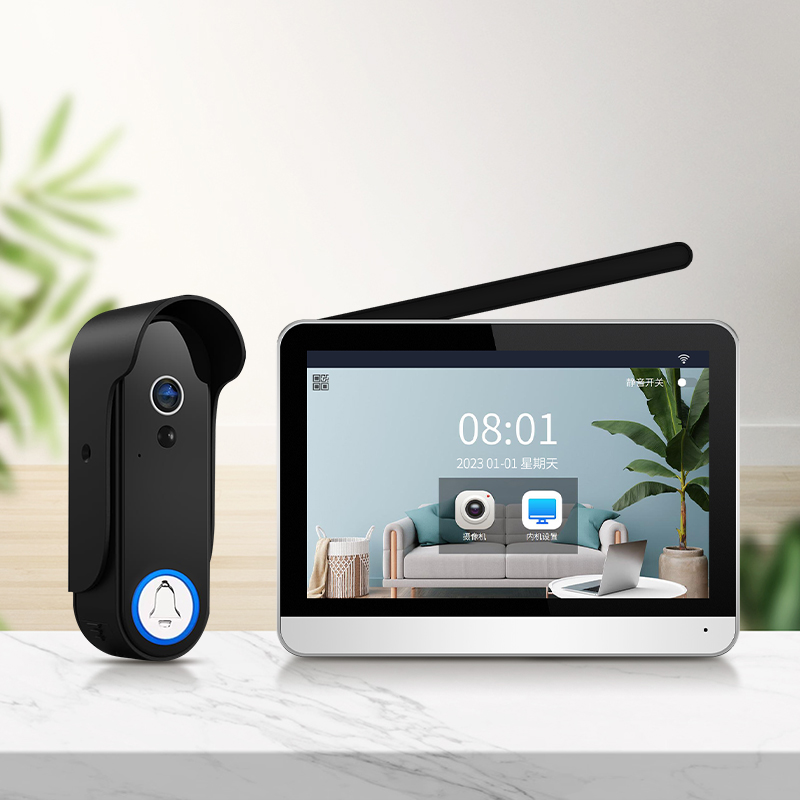
Amidst the wave of smart homes, the wireless doorbell has emerged as a vital bridge connecting the interior and exterior of our residences, witnessing unprecedented technological advancements. Evolving from simple sound alerts to intelligent devices integrating touch recognition, dynamic threshold adjustment, gesture control, and smart connectivity, these changes not only signify a leap in technology but also profoundly impact our lifestyles. This article delves into the core of wireless doorbell technology—the refinement of touch recognition algorithms—and offers insights into its future development trends.
I. Refinement of Touch Recognition Algorithms: From Basics to Excellence
Algorithm Principles and Optimization
The heart of touch recognition algorithms lies in accurately identifying users' touch behaviors and translating them into actionable commands for the system. Traditional algorithms might suffer from fixed thresholds and reliance on single sensor data, leading to frequent false or missed touches. However, modern wireless doorbells employ advanced algorithms, such as machine learning and deep learning, that continuously learn and optimize to precisely capture and analyze users' touch behaviors. These algorithms can recognize multiple dimensions of information, including fingertip contact area, pressure distribution, and sliding trajectories, significantly enhancing recognition accuracy and stability.
Multi-Touch and Fine Motion Capture
Wireless doorbells commonly support multi-touch technology, enabling users to operate with multiple fingers simultaneously, such as zooming in/out on the monitoring screen or adjusting volume. Furthermore, some high-end models possess fine motion capture capabilities, detecting subtle finger movements or tremors. This feature is crucial for enhancing operation accuracy and comfort, especially in scenarios requiring precise adjustments (e.g., adjusting the clarity of monitoring images).
Adaptive Adjustment Mechanism
To adapt to varying users and environments, wireless doorbells are equipped with adaptive adjustment mechanisms. These mechanisms monitor users' habits and environmental factors (e.g., temperature, humidity, light) in real-time, automatically adjusting sensitivity thresholds accordingly. For instance, in dry winter conditions, the system might increase sensitivity to address issues related to dry fingers and static electricity. Conversely, in dimly lit corridors, it might enhance backlight brightness for better visibility. This intelligent adjustment not only enhances user experience but also prolongs device lifespan.
II. Dynamic Threshold Adjustment: Intelligent Response to Complex Scenarios
Environmental Perception and Response
Dynamic threshold adjustment is a pivotal aspect of wireless doorbell intelligence. Through built-in environmental sensors (e.g., temperature and humidity sensors, light sensors), the system can perceive changes in the surroundings and adjust sensitivity thresholds to suit different scenarios. For example, during rainy or high-humidity weather, the system might decrease sensitivity to reduce false touches. Conversely, on sunny days, it might dim backlighting to conserve energy.
III. Gesture Recognition Technology: Ushering in a New Era of Interaction
Basic and Advanced Gesture Recognition
Gesture recognition technology introduces a novel interaction mode for wireless doorbells. Users can execute basic operations through simple gestures (e.g., swiping, tapping). Advanced gestures (e.g., rotating, zooming, custom gestures) offer richer and more flexible interaction experiences. For instance, users can rotate the monitoring screen, zoom in/out for more details, or even use custom gestures to swiftly switch working modes or execute specific commands.
Conclusion and Outlook
The innovation in wireless doorbell technology transcends mere refinement of touch recognition algorithms and dynamic threshold adjustment. It encompasses the introduction of gesture recognition technology and integration with smart home systems, enhancing user experience and security while infusing new vitality into the smart home sector. As artificial intelligence, the Internet of Things, and other technologies continue to evolve, wireless doorbells will become increasingly intelligent, personalized, and convenient.
Chinese Website——http://www.dgjiasong.com/



 CHINESE
